
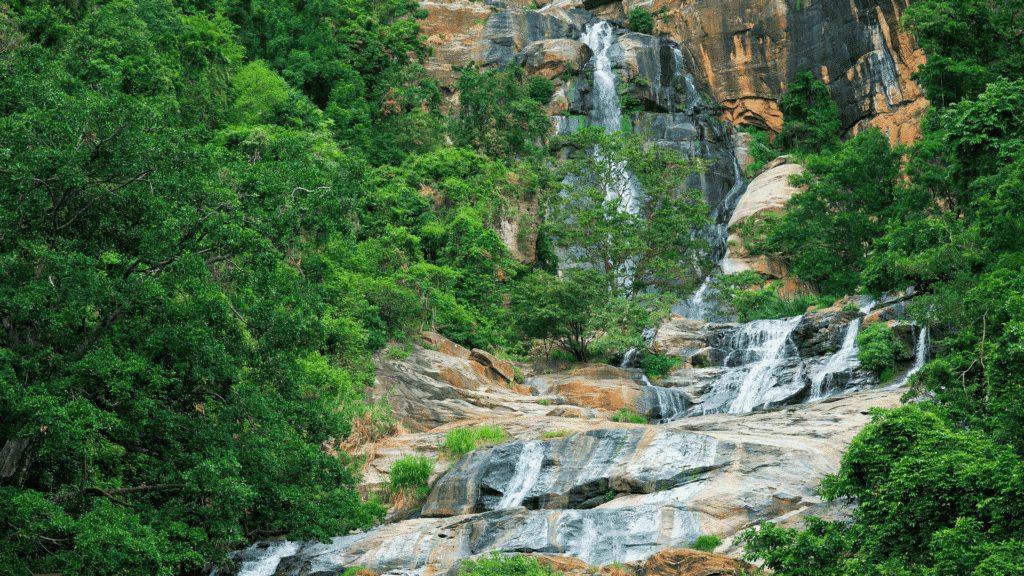
The Magic of Sri Lanka’s Hill Country
Sri Lanka is a tropical paradise that hides a spectacular secret in its misty interior. The central highlands are home to over three hundred and eighty recorded waterfalls. This dense concentration makes the island a premier destination for waterfall hunters and nature enthusiasts.
The geographical layout of the island, combined with two annual monsoon seasons, creates the perfect environment for these rushing cascades. Rainwater collects in the elevated peaks and rapidly descends through deep valleys. The resulting waterfalls range from gentle, tiered streams to roaring, powerful drops.
Exploring these natural wonders allows you to step off the heavily trodden tourist paths. You will find yourself immersed in dense pine forests, vast tea estates, and remote local villages. It is an experience that combines thrilling adventure with serene, natural beauty.
Finding these cascades requires a bit of planning and a willingness to explore. While some are visible right from the main highways, others demand a challenging hike through untamed jungle. This guide will walk you through the absolute best waterfalls on the island and exactly how to find them.
The Most Spectacular Waterfalls to Visit
Bambarakanda Falls: The Tallest Giant
Bambarakanda Falls proudly holds the title of the tallest waterfall in Sri Lanka. It reaches a staggering height of two hundred and sixty-three meters. The water drops down a sheer vertical rock face, appearing like a delicate silver thread against the dark stone.
Surrounded by a majestic pine forest, the atmosphere here is incredibly tranquil. The base of the falls features a small pool, though the force of the water makes it more suitable for admiration than swimming. During the rainy season, the delicate thread transforms into a thundering torrent.
Finding Bambarakanda Falls requires venturing off the main transport routes. The turn-off is located along the Kalupahana-Ohiya road, deep within the Badulla District. You will navigate a narrow, winding road that is best tackled in a sturdy vehicle.
Once you reach the designated parking area, a short hike through the pine trees awaits. The trail is mostly clear but can become quite muddy and slippery after heavy rainfall. The final clearing offers a breathtaking, unobstructed view of the entire drop.
Diyaluma Falls: Infinity Pools and Epic Views
Diyaluma Falls drops an impressive two hundred and twenty meters, making it the second-tallest cascade on the island. It is situated near the town of Koslanda. The waterfall is famous for its dramatic, tiered appearance and sheer volume of water.
The true highlight of Diyaluma is the series of natural infinity pools located at the very top. These rocky basins collect the rushing water before it plummets over the edge. Sitting in these pools offers a truly panoramic view of the sweeping valleys below.
To reach the upper pools, you must undertake a slightly challenging hike. Most travelers start the trek from the nearby Makaldeniya Junction. The path takes you through tall grass, uneven rocky terrain, and patches of dense scrub.
The hike usually takes about forty-five minutes to an hour, depending on your pace. It is highly recommended to hire a local guide from the nearby village, as the trail can be confusing. The reward at the summit is arguably one of the most photogenic spots in all of Sri Lanka.
Ravana Falls: The Accessible Wonder
Ravana Falls is deeply intertwined with the ancient Indian epic, the Ramayana. According to legend, the demon king Ravana hid Princess Sita in the caves behind this very cascade. The falls are characterized by a wide, dramatic drop over concave rocks.
This waterfall is known for its impressive width and the chaotic, beautiful way the water crashes down. During the dry season, it slows to a gentle trickle over the massive boulders. However, after the rains, it swells into a fierce and powerful spectacle.
Finding Ravana Falls is remarkably easy, making it a favorite for travelers. It is located right beside the Ella-Wellawaya main road. You can see the majestic cascade clearly from the comfort of a passing vehicle.
Because of its location just a short drive from the center of Ella, it requires no hiking to access the main viewing area. You can simply step out of your vehicle and immediately feel the cool mist on your face. It is an ideal stop for those with limited time or mobility.
St. Clair’s Falls: The Little Niagara
St. Clair’s Falls is affectionately known as the “Little Niagara of Sri Lanka.” It is actually composed of two distinct waterfalls, known as the Greater Fall and the Lesser Fall. The combined width and dramatic double cascade are incredibly striking.
The waterfall is beautifully framed by rolling, emerald-green tea plantations. The contrast between the white, rushing water and the manicured tea bushes creates a postcard-perfect setting. It is one of the widest waterfalls on the island.
Finding St. Clair’s Falls is a straightforward and scenic journey. It is located near the town of Talawakele within the Nuwara Eliya District. The drive itself is an attraction, winding through endless oceans of tea.
The best vantage point is an observation deck situated right along the Hatton-Talawakele road. You do not need to hike down to the base to appreciate its beauty. The roadside viewpoint offers a sweeping, unobstructed look at the entire valley.
Dunhinda Falls: The Misty Cascade
Dunhinda Falls is famous for the enchanting, smoky mist that engulfs its base. The cascade is roughly sixty-four meters high but carries a tremendously powerful volume of water. The resulting spray creates the dense mist that gives the falls its name.
The river that feeds the falls is the Badulu Oya, which rushes vigorously through a narrow gorge. The surrounding jungle is thick, vibrant, and teeming with wildlife. It feels like a hidden, prehistoric world entirely separate from civilization.
The journey to Dunhinda begins just a few kilometers outside the town of Badulla. A well-marked jungle trail leads you from the entrance gate down to the viewing area. The walk takes about forty-five minutes to an hour each way.
The trail is scenic and offers glimpses of endemic birds, colorful butterflies, and playful monkeys. However, the path can be uneven and features several steep, rocky steps. Be prepared for a moderate physical challenge before you reach the viewing platform.
Baker’s Falls: A Trekker’s Delight
Baker’s Falls is named after the British explorer Sir Samuel Baker, who popularized the area in the nineteenth century. It is situated on the Belihul Oya river. The cascading waters contrast beautifully with the surrounding pink rhododendrons and giant ferns.
This waterfall is relatively short, at about twenty meters, but it is incredibly wide and picturesque. The icy mountain water rushes over a series of wide rock steps. The sound of the rushing water echoes loudly through the silent, high-altitude plains.
Finding Baker’s Falls is an adventure that requires entering a protected reserve. It is located directly within the borders of Horton Plains National Park. You will need to undertake the park’s popular circular hiking trail to reach it.
The hike is mostly flat, but the specific descent down to the waterfall viewpoint is quite steep. The trail is well-maintained and clearly marked by park authorities. It is a fantastic reward after crossing the open, wind-swept plains of the park.
Laxapana Falls: Deep Pools and Local Legends
Laxapana Falls plunges one hundred and twenty-six meters over a steep rock face. It is steeped in local folklore and religious significance. Legend has it that Buddha mended his robes here while visiting the nearby sacred mountain.
The waterfall generates an enormous amount of power, which is actually harnessed by nearby hydroelectric stations. Despite this modern utility, the area immediately surrounding the falls remains rugged and unspoiled. The deep pool at the base is surrounded by dense forest.
The falls are located in the Nuwara Eliya District, relatively close to the town of Maskeliya. This is the same region that serves as a base for climbing Adam’s Peak. Finding the entrance requires navigating some winding, rural roads.
Reaching the base involves descending a very steep, winding concrete staircase. There are hundreds of steps that lead you deep into the valley. While the descent is easy, the hike back up can be physically demanding in the humid heat.
Practical Logistics for Waterfall Hunters
Travel Times and Transportation
Basing yourself in popular towns like Ella, Nuwara Eliya, or Badulla is the best strategy. From these hubs, most major waterfalls are within a one to two-hour drive. The winding mountain roads mean that distances take much longer to cover than you might expect.
Hiring a local tuk-tuk for the day is often the most convenient way to waterfall hop. The drivers know the terrain perfectly and can navigate the narrow, poorly paved access roads. For more independence, renting a scooter is an option, though strictly for experienced riders.
Public buses do travel between the main hill country towns and can get you close to some sites. However, they will rarely drop you right at the trailhead. You will almost always need to walk a significant distance or arrange secondary transport.
Pacing Your Itinerary
Do not attempt to visit more than two major waterfalls in a single day. The combination of winding roads, hiking, and the tropical heat will quickly lead to exhaustion. Give yourself time to actually sit, relax, and enjoy the natural environment.
Start your days early to avoid the heaviest afternoon rains, especially during the monsoon transition months. Early mornings also provide the best, softest lighting for photography. Additionally, you are more likely to have the trails and viewpoints entirely to yourself.
Always factor in time for a slow, arduous hike back to your vehicle. Climbing back up steep valleys takes significantly longer than the descent. Allow for plenty of rest stops along the way.
Dress Code and Etiquette
While Sri Lanka is a tropical country, the hill country can be surprisingly chilly, especially in the early mornings. Dress in light, breathable layers that you can easily remove. Quick-drying fabrics are essential, as you will likely get sprayed by mist or caught in a brief shower.
When swimming in natural pools, be mindful of local customs and modesty. It is generally advised to avoid extremely revealing swimwear in rural areas. Wearing a t-shirt and shorts over your swimwear when hiking back to the road is a respectful practice.
Never leave any trash behind, as these are pristine natural environments. There are rarely garbage bins on the jungle trails. Always carry a small bag to pack out whatever you bring in.
Essential Packing List
- Sturdy, closed-toe hiking shoes with excellent grip for slippery rocks.
- A lightweight, packable rain jacket or poncho.
- A waterproof dry bag to protect your phone and camera from heavy mist.
- A basic first aid kit with bandages for minor scrapes and leeches.
- High-deet insect repellent to ward off mosquitoes and jungle insects.
- A reusable water bottle to stay hydrated during steep climbs.
- A quick-drying microfiber towel if you plan to swim in the natural pools.
Top Safety Tips for Waterfall Exploration
- Never swim at the immediate base of a massive drop, as undercurrents can be fatal.
- Avoid crossing rivers or entering natural pools during or immediately after heavy rainfall.
- Flash floods can occur rapidly in the hill country; always monitor the water level and color.
- Stick to clearly marked trails and do not attempt to blaze your own path through the jungle.
- Be highly vigilant when walking on wet, moss-covered rocks near the edge of cliffs.
- Listen to the advice of local guides regarding which pools are safe for swimming.
Conclusion
Sri Lanka’s waterfalls offer some of the most breathtaking and diverse natural scenery in South Asia. From the soaring heights of Bambarakanda Falls to the panoramic infinity pools of Diyaluma Falls, each site provides a unique adventure. Exploring these cascades allows you to connect deeply with the island’s lush, mountainous heart.
Finding these hidden gems requires a sense of adventure and a willingness to embrace the journey. The hikes through dense jungles and tea estates are just as rewarding as the destinations themselves. With proper planning, respect for nature, and careful logistical preparation, your waterfall-hunting expedition will be unforgettable.