
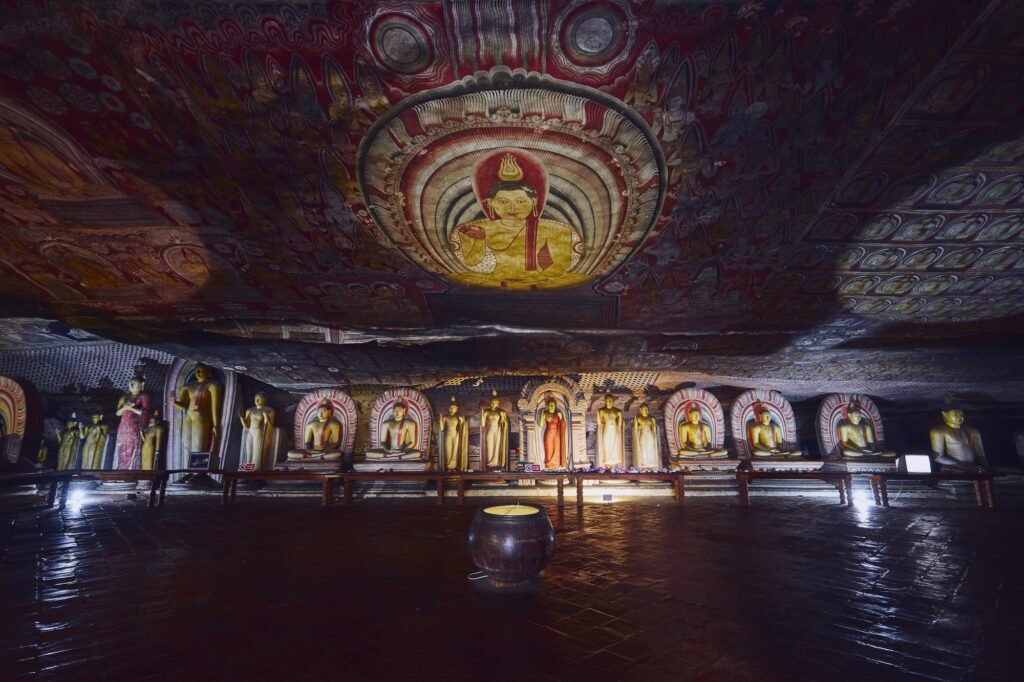
Deep within the heart of Sri Lanka’s cultural triangle lies a marvel of ancient engineering and devotion. The Dambulla Royal Cave Temple, also known as the Golden Temple of Dambulla, is a breathtaking UNESCO World Heritage site. It stands as a testament to the island’s rich spiritual heritage and artistic brilliance. Carved into a massive granite outcrop, this sacred site has drawn pilgrims and travelers for over twenty centuries.
Visiting this monumental site offers a profound journey through time. You will walk the same stone paths tread by ancient kings, monks, and devotees. The intricate murals and imposing statues within the caves tell a story of resilience and faith. This guide will walk you through its captivating history and provide essential tips to ensure a seamless visit.
The Ancient History of Dambulla
The origins of the Dambulla Royal Cave Temple date back to the first century BC. During this turbulent period, King Valagamba of the Anuradhapura Kingdom was driven from his throne by South Indian invaders. Forced into exile, the king sought refuge in the dense forests and hidden caves of the Dambulla region. These natural rock shelters provided a safe haven for him for over fourteen years.
With the help of loyal followers and Buddhist monks, King Valagamba eventually reclaimed his kingdom. Filled with gratitude for the sanctuary the caves provided, he transformed them into a magnificent Buddhist temple. He commissioned the carving of intricate rock statues and the painting of vibrant murals. This initial act of devotion laid the foundation for one of the most spectacular religious sites in Asia.
Over the centuries, subsequent rulers continued to expand and embellish the temple complex. King Nissanka Malla of the Polonnaruwa Kingdom is said to have gilded dozens of statues in the twelfth century. Later, during the eighteenth century, the Kandyan kings undertook massive restoration projects. They repainted faded murals and added new artworks reflecting the distinctive Kandyan artistic style.
Exploring the Five Magnificent Caves
The temple complex consists of five separate caves, each possessing its own unique character and historical significance. Together, they house over one hundred and fifty Buddha statues, along with figures of Sri Lankan kings and Hindu deities. The cave ceilings and walls are entirely covered in murals depicting scenes from the life of Lord Buddha.
Cave of the Divine King (Devaraja Lena)
The first cave you will encounter is the Cave of the Divine King. This cavern is dominated by a colossal reclining Buddha statue that spans over fourteen meters in length. Carved directly from the living rock, this magnificent sculpture depicts the Buddha’s final passing into Nirvana. The sheer scale and serene expression of the statue are deeply moving.
At the feet of the reclining Buddha stands a statue of his loyal disciple, Ananda. Nearby, you will find a shrine dedicated to the Hindu deity Vishnu, reflecting the syncretic nature of ancient Sri Lankan religious practices. The walls of this cave are adorned with ancient paintings, though time and incense smoke have faded some of their original vibrancy.
Cave of the Great Kings (Maharaja Lena)
The Maharaja Lena is the largest and arguably the most impressive cave in the complex. It measures over fifty meters in length and reaches a height of seven meters at its peak. This vast space was named after the two great kings who contributed significantly to its creation, King Valagamba and King Nissanka Malla. Wooden statues of both monarchs stand proudly within the cavern.
This cave features a stunning array of seated and standing Buddha statues arranged in a semi-circle. The ceiling is a masterpiece of ancient art, covered entirely in intricate murals. A fascinating feature of this cave is a small spring that drips water constantly from the ceiling. Even during severe droughts, this sacred water never ceases to flow and is collected for temple rituals.
The Great New Monastery (Maha Alut Viharaya)
The third cave, the Maha Alut Viharaya, was constructed during the eighteenth century by King Kirti Sri Rajasinha of the Kandyan Kingdom. This spacious cavern boasts a vibrant display of Kandyan-style artistry. A striking statue of the king himself stands near the entrance, acknowledging his patronage.
Inside, you will find fifty meticulously carved Buddha statues alongside beautifully detailed ceiling murals. The colors in this cave are remarkably well-preserved, showcasing deep reds, bright yellows, and rich blacks. A large reclining Buddha statue is also featured here, carved out of the solid rock wall.
The Western Cave and The Second New Temple
The fourth cave, known as the Western Cave (Pachchima Viharaya), is smaller but equally significant. It features a beautiful seated Buddha statue meditating under a Makara Torana, an archway decorated with mythical creatures. The walls are covered in detailed floral and geometric patterns.
The fifth and final cave is the Second New Temple (Devana Alut Viharaya). This is the newest addition to the complex, heavily restored in the early twentieth century. It contains a large reclining Buddha statue and several smaller seated figures. While the artwork here is more modern compared to the others, it still perfectly complements the spiritual atmosphere of the site.
Highlights of the Dambulla Royal Cave Temple
When you visit, there are specific elements of the temple that demand your attention. Take your time to appreciate the incredible craftsmanship and historical layers present in every corner.
- The Ceiling Murals: The cave ceilings follow the natural contours of the rock, yet the paintings flow seamlessly across them. They depict intricate Buddhist stories and historical battles.
- The Colossal Reclining Buddhas: The sheer size of the reclining statues in the first and third caves is awe-inspiring. Notice the delicate folds of their robes carved into the hard granite.
- The Sacred Water Spring: Observe the continuous drip of water in the Maharaja Lena. It is an unexplained natural phenomenon that adds to the mystical aura of the temple.
- The Panoramic Views: From the terrace outside the caves, you can enjoy sweeping views of the surrounding plains. On a clear day, the imposing silhouette of the Sigiriya Rock Fortress is visible in the distance.
Practical Logistics for Your Visit
Proper planning is essential to make the most of your visit to the Dambulla Royal Cave Temple. Because it is an active place of worship and a major historical site, certain logistics must be considered. Understanding the layout and local conditions will ensure a comfortable experience.
Travel Times and Itinerary Planning
Dambulla is centrally located, making it an easy addition to most travel itineraries. It sits at a major junction connecting Colombo, Kandy, and the ancient city of Anuradhapura. Most travelers combine a visit here with a trip to the nearby Sigiriya Rock Fortress, which is just a short drive away.
If you are traveling from Kandy, expect the journey to take roughly two to three hours depending on traffic. Coming from Colombo requires a bit more time, usually around four hours. Because of its proximity to other major sites in the cultural triangle, staying overnight in the Dambulla or Sigiriya area is highly recommended.
Pacing Your Exploration
To reach the caves, you must climb a series of stone steps carved into the hillside. The ascent typically takes fifteen to twenty minutes at a moderate pace. While it is not as strenuous as the climb at Sigiriya Rock Fortress, the tropical heat can make it challenging.
Once you reach the top, allow yourself at least one and a half to two hours to explore the caves thoroughly. You will want to move slowly through the dimly lit interiors to fully appreciate the murals and statues. Take time to rest in the shaded courtyards between the caves to absorb the serene atmosphere.
Essential Visitor Tips
As a sacred Buddhist site, visiting the Dambulla Royal Cave Temple requires respect for local customs and religious practices. Following these guidelines will ensure you have a respectful and enjoyable experience while preserving the site for future generations.
Dress Code Requirements
Strict dress codes are enforced at all Buddhist temples in Sri Lanka. Both men and women must wear modest clothing that covers their shoulders and knees. Sleeveless shirts, tank tops, shorts, and short skirts are not permitted. If your attire is deemed inappropriate, you may be denied entry at the ticket gate.
It is always a good idea to carry a lightweight sarong or scarf in your daypack. You can easily wrap this around your waist or drape it over your shoulders before beginning the climb. Wearing loose, breathable clothing is ideal for managing the heat while adhering to the dress code.
Footwear and the Stone Ground
You are required to remove your shoes before entering the main courtyard and the caves themselves. There is a shoe storage facility near the entrance where you can leave your footwear safely. You will be walking barefoot or in socks for the duration of your time exploring the upper complex.
The stone pavement in the courtyard is fully exposed to the sun and absorbs a tremendous amount of heat. By midday, walking barefoot can be extremely painful. It is highly recommended that you bring a thick pair of socks specifically to wear around the temple grounds to protect your feet from burning.
Dealing with the Elements
The climb to the temple offers little shade, so sun protection is vital. Try to plan your visit for the early morning right after the gates open, or in the late afternoon. This helps you avoid the intense midday heat and the largest crowds of tour groups.
Be aware that the area is home to a large population of wild macaque monkeys. While they make for great photographs, they can be aggressive if they spot food or plastic bags. Keep all snacks securely packed away inside a zipped backpack and avoid feeding them under any circumstances.
Photography Rules
Photography is permitted in most areas of the temple complex, allowing you to capture the stunning interiors. However, the use of camera flashes is strictly prohibited. Flash photography can cause irreversible damage to the ancient, delicate pigments used in the murals.
When taking photos, remember that turning your back to a Buddha statue is considered highly disrespectful. Always stand sideways or face the statue while a photograph is being taken of you. Avoid posing inappropriately or making loud noises within the sacred spaces.
What to Pack for Dambulla
Packing the right items in your day bag will make your excursion much more comfortable. Here is a quick checklist to help you prepare.
- Thick Socks: Essential for protecting your feet from the scorching hot stone pavements in the temple courtyard.
- Modest Cover-ups: A sarong, long pants, or a large scarf to ensure your shoulders and knees are fully covered.
- Plenty of Water: The climb is steep and the climate is humid, so staying hydrated is crucial.
- Sun Protection: A wide-brimmed hat, sunglasses, and high-SPF sunscreen for the uncovered sections of the climb.
- Secure Backpack: A bag with strong zippers to keep your belongings safe from curious and bold monkeys.
Conclusion
The Dambulla Royal Cave Temple is a mesmerizing blend of natural wonder and deep spiritual history. From its origins as a king’s refuge to its current status as a revered pilgrimage site, its walls hold centuries of devotion. The artistry on display here is unparalleled and offers a unique window into Sri Lanka’s ancient past.
By planning your logistics carefully and respecting the cultural guidelines, you will have a truly unforgettable experience. Stand beneath the towering stone ceilings, admire the serene faces of the Buddha statues, and let the history wash over you. A visit to these magnificent caves is an essential part of any journey through Sri Lanka’s cultural heartland.